
Floor Prep Matters: What Direct Clients Should Expect from ACF Direct Services

Hiring a flooring contractor directly? Floor prep is the difference between a floor that lasts and one you replace again. Learn how ACF Direct Services handles testing, grinding, moisture, and underlayment before anything new goes down.
A new commercial floor looks like a material decision, but its performance goes beyond the visible surface. The slab beneath it determines whether the finished floor bonds, stays flat, resists moisture-related failure, and performs under years of traffic and cleaning.
ACF Direct Services helps school districts, healthcare facilities, property managers, building owners, and facilities teams manage that risk from the first assessment through commercial flooring installation. Where project conditions require it, concrete moisture testing may include relative humidity probes installed at approximately 40% of slab thickness and readings taken after a stabilization period of up to 72 hours.
In 2026, direct clients are looking for more than a low material price. They need schedule certainty, documented preparation, predictable maintenance, and a flooring contractor that can explain what is happening beneath the surface.
Why Floor Prep Goes Beyond the Floor Covering
When a school, clinic, office, or civic building needs new flooring, the visible problem is often worn vinyl, cracked tile, stained carpet, or an outdated maintenance system. However, the underlying failure may be in the concrete or subfloor.
Common substrate problems include:
- Moisture in the concrete attacking the adhesive from below.
- Old glue, patch, or adhesive residue preventing a reliable bond.
- Cracks telegraphing through sheet vinyl, Luxury Vinyl Tile (LVT), linoleum, or rubber.
- Uneven slabs creating high-wear areas and low spots where water or cleaner collects.
- Weak or contaminated surfaces that prevent primer, underlayment, or adhesive from gripping.
Replacing the finish without correcting these conditions can produce the same failure again. A new floor may look complete on opening day, but the system underneath it remains vulnerable.
Learn more about commercial flooring assessments before selecting a material or approving a scope.
#1: Expect an Assessment Before a Product Recommendation
A direct relationship with a commercial flooring contractor should begin with questions, not a product catalog.
ACF Direct Services starts by understanding how the building operates, what failed previously, and what the facilities team needs the new floor to withstand. A cafeteria, patient corridor, classroom, laboratory, and office lobby do not experience the same traffic, cleaning, moisture, or rolling-load conditions.
The assessment considers
- Existing flooring and adhesive conditions.
- Cracks, joints, depressions, and uneven areas.
- High-traffic and high-risk zones.
- Moisture and alkalinity conditions in the slab.
- The expected use of the space.
- Cleaning equipment and custodial procedures.
- Occupancy schedules and access restrictions.
- Flooring manufacturer requirements and warranty conditions.
| Direct-client concern | What the assessment clarifies | Practical benefit |
|---|---|---|
| Recurring cracks | Whether cracks are isolated or part of a broader substrate issue | Reduces the chance of cracks telegraphing through the new floor |
| Adhesive failure | Whether old glue or patch must be removed mechanically | Creates a cleaner bonding surface |
| Moisture | Whether the slab requires a moisture-resistant system | Helps protect adhesives and resilient flooring |
| Uneven concrete | Whether grinding or cementitious underlayment is needed | Provides a smoother receiving surface |
| Maintenance difficulty | Which flooring and cleaning program fit the facility | Supports long-term custodial performance |
This is the first difference between a basic flooring quote and a complete scope from a floor installation contractor. The assessment identifies what the floor needs before demolition exposes additional problems.
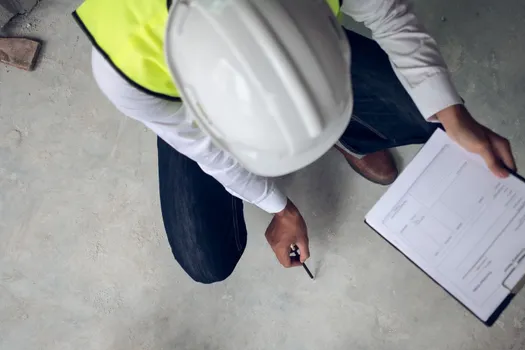
#2: Expect Testing, Mechanical Preparation, and Documentation
A broom-clean slab is not necessarily a prepared slab. Commercial flooring installation requires a surface that is clean, profiled, sound, and compatible with the selected system.
ACF Direct Services uses a sequence that may include testing, adhesive removal, diamond grinding, shot blasting, crack repair, moisture mitigation, bonding primer, and cementitious underlayment.
Moisture testing
Concrete can appear dry while retaining moisture below the surface. ACF evaluates the slab using relative humidity probes and/or Tramex substrate readings, depending on the project and flooring system.
The results help determine whether:
- A standard adhesive is appropriate.
- A moisture-resistant bonding primer membrane is required.
- Additional mitigation is needed before installation.
- The proposed flooring system is compatible with the slab conditions.
Consider moisture readings alongside the flooring manufacturer’s written requirements. A product warranty generally depends on proper substrate conditions, adhesive selection, installation procedures, and maintenance.
Mechanical profiling
Mechanical preparation removes contaminants and creates the texture required for the next layer to bond. ACF uses diamond grinding or shot blasting to prepare the substrate to an appropriate International Concrete Repair Institute (ICRI) Concrete Surface Profile (CSP).
For many commercial flooring and underlayment systems, the target is typically ICRI CSP 3 or CSP 4:
- CSP 3: A light-to-moderate profile suitable for many direct-bond and thin-film applications.
- CSP 4: A more pronounced profile often used for cementitious underlayments and systems requiring additional mechanical bond.
The correct profile depends on the specified materials. More texture is not automatically better; the surface must match the primer, underlayment, adhesive, and finish flooring system.
Crack repair and underlayment
Cracks are chased, treated, and repaired with ACF’s resin system. Where the slab is uneven or damaged, a site-mixed cementitious topping can create a smooth, specified receiving surface, often up to 3/16 inch for the described Floor Prep Matters sequence.
That underlayment is not decorative. It helps provide the flatness and consistency required for rubber, sheet vinyl, LVT, linoleum, carpet tile, resinous flooring, and other commercial products.

#3: Expect One Coordinated Scope Instead of Multiple Handoffs
Direct service means ACF owns the work from assessment through installation. The client does not need to coordinate a demolition crew, a moisture vendor, a prep subcontractor, an underlayment installer, and a separate flooring installer.
A typical ACF Direct project may include:
- On-site assessment and project planning.
- Removal of existing floor coverings.
- Removal of adhesive, failed patch, and other bond breakers.
- Moisture and alkalinity testing.
- Diamond grinding or shot blasting to the specified profile.
- Crack chasing and resin repair.
- Moisture-resistant membrane and bonding primer, when required.
- Cementitious underlayment placement.
- Installation of the selected flooring system.
- Custodial guidance suited to the installed product.
This turn-key approach supports the project schedule because demolition, testing, preparation, curing, and installation can be planned as one critical path. For schools, healthcare facilities, and occupied commercial buildings, that coordination matters.
| Project approach | Multiple vendors | ACF Direct Services |
|---|---|---|
| Assessment | May be limited to visible flooring conditions | Reviews existing flooring, use, failures, and substrate needs |
| Moisture testing | May be treated as a separate service | Coordinated with the proposed flooring system |
| Floor preparation | Often divided between trades | Prep and installation managed under one scope |
| Schedule | Handoffs can create delays | Demo, prep, cure, and installation planned together |
| Warranty support | Responsibility may be unclear | Installation follows manufacturer requirements |
| Client communication | Several points of contact | One direct flooring partner |
This is particularly valuable for facility teams managing tight occupancy calendars. A flooring project is not complete when materials arrive; it is complete when the substrate, installation, maintenance program, and documentation support the intended performance.
#4: Expect the Flooring System to Match the Building
Floor Prep Matters is not tied to one product category. The right finish depends on the room's use, substrate conditions, the maintenance program, and the owner’s performance goals.
Rubber flooring
Rubber tile is often appropriate for schools, multipurpose rooms, corridors, and other high-traffic areas where durability, acoustic value, slip resistance, and simplified maintenance are priorities.
Sheet vinyl and LVT
Sheet vinyl can provide a continuous, hygienic surface for healthcare and education environments. LVT offers design flexibility and can mimic wood or stone while supporting commercial traffic requirements.
Carpeting
Carpet remains useful in offices, classrooms, libraries, and other areas where acoustics, cleanability, and replaceability are important.
Resinous flooring
Resinous systems can be considered for spaces that require seamless, cleanable, durable surfaces, including selected wet or high-abuse environments.
| Flooring system | Particularly suitable for | Maintenance and performance considerations |
|---|---|---|
| Rubber tile | Schools, cafeterias, multipurpose rooms, corridors | Durable, acoustic, and often compatible with scrub-and-rinse programs |
| Sheet vinyl | Healthcare, laboratories, classrooms, wet-prone areas | Seam treatment and substrate flatness are critical |
| LVT | Offices, classrooms, public interiors | Design flexibility with commercial wear requirements |
| Carpet (tile or hybrid sheet) | Offices, libraries, sound-sensitive spaces | Individual tiles can be replaced when localized damage occurs |
| Resinous flooring | Utility, service, and high-abuse areas | Requires careful moisture evaluation and surface preparation |
No finish can compensate for a wet, contaminated, cracked, or uneven substrate. Product selection and floor preparation must work together.

A Real-World Example: Fairfield-Suisun USD
At Fairfield-Suisun Unified School District, we replaced the flooring in three multipurpose rooms. The existing VCT was aged and failing, with visible cracks in the concrete slab. The district needed a long-term solution with acoustic value, slip resistance, durability for students, and a simpler scrub-and-rinse custodial routine, without VCT's strip-and-wax maintenance.
The solution was not to cover the existing problems. ACF provided the Turn-Key Floor Prep Matters sequence:
- Diamond grinding or shot blasting to remove contaminants and establish a CSP 3 or CSP 4 profile.
- Resin crack repair.
- Bonding primer and moisture-resistant membrane.
- Cementitious topping to create a smooth underlayment.
- Installation of Nora Grano full-size rubber tile.
- Custodial guidance for the finished floor.
The result was a resilient rubber floor selected for the facility’s operational needs, not simply a replacement material placed over unresolved conditions.
Who ACF Direct Services Is For
ACF Direct Services is designed for clients who contact the flooring contractor themselves, including:
- School districts replacing cafeterias, classrooms, corridors, and multipurpose rooms.
- Healthcare and outpatient facilities requiring cleanable, hygienic flooring.
- Property managers and building owners planning tenant improvements or capital repairs.
- Maintenance and operations teams addressing recurring floor failures.
- Public agencies using procurement options such as CMAS or OMNIA for turn-key flooring work.
When a project runs through a general contractor, ACF can also perform as the specialty flooring installer. This direct-services approach is for owners and facilities teams that want one accountable partner for assessment, preparation, installation, and support.
Bottom Line: Floor Prep Is the Job
A commercial floor is more than the material people see on day one. It is a complete performance system: a tested slab, a profiled and repaired substrate, compatible moisture control, a properly applied underlayment, and a finish installed according to the manufacturer’s requirements.
Low-cost floor covering can be easy to purchase. Long-term floor performance requires more planning.
ACF Direct Services handles the preparation that many quotes leave thin, because preparation is often what determines whether the floor lasts. Explore commercial floor preparation services, professional flooring installation, and commercial floor warranties to understand how the full system fits together.
Request a Direct Consultation
If you are planning an upcoming flooring project, tell ACF about the building, the rooms, the existing floor, and what went wrong last time. ACF Direct Services can assess the substrate, explain the required preparation, and quote the real scope before demolition begins.
Request a quote or contact the commercial flooring division at (707) 687-4754.
Email: sales@allcountyflooring.com
Corporate Office: 451 Ryder Street, Suite B, Vallejo, CA 94590
Warehouse and Deliveries: Bldg. S, Vallejo, CA 94590
Related reading: Commercial Floor Preparation Services • ACF Direct Services • Where We Work