
Assess site substrate or subfloor
Review existing conditions, flooring requirements, and site access. Identify uneven areas, cracks, moisture concerns, and existing adhesives that may affect the new installation.
Commercial floor preparation
Preparing a commercial space has to start from the ground up. The success of a flooring project depends on meticulous preparation, whether renovating an existing office area or laying the groundwork for new construction. A smooth, durable surface forms the foundation for the floor covering.
Floor preparation begins with understanding the site conditions and the needs of the selected flooring system. Reviewing the substrate, checking for moisture concerns, and identifying uneven areas or old adhesive helps the team plan the right preparation steps before installation.
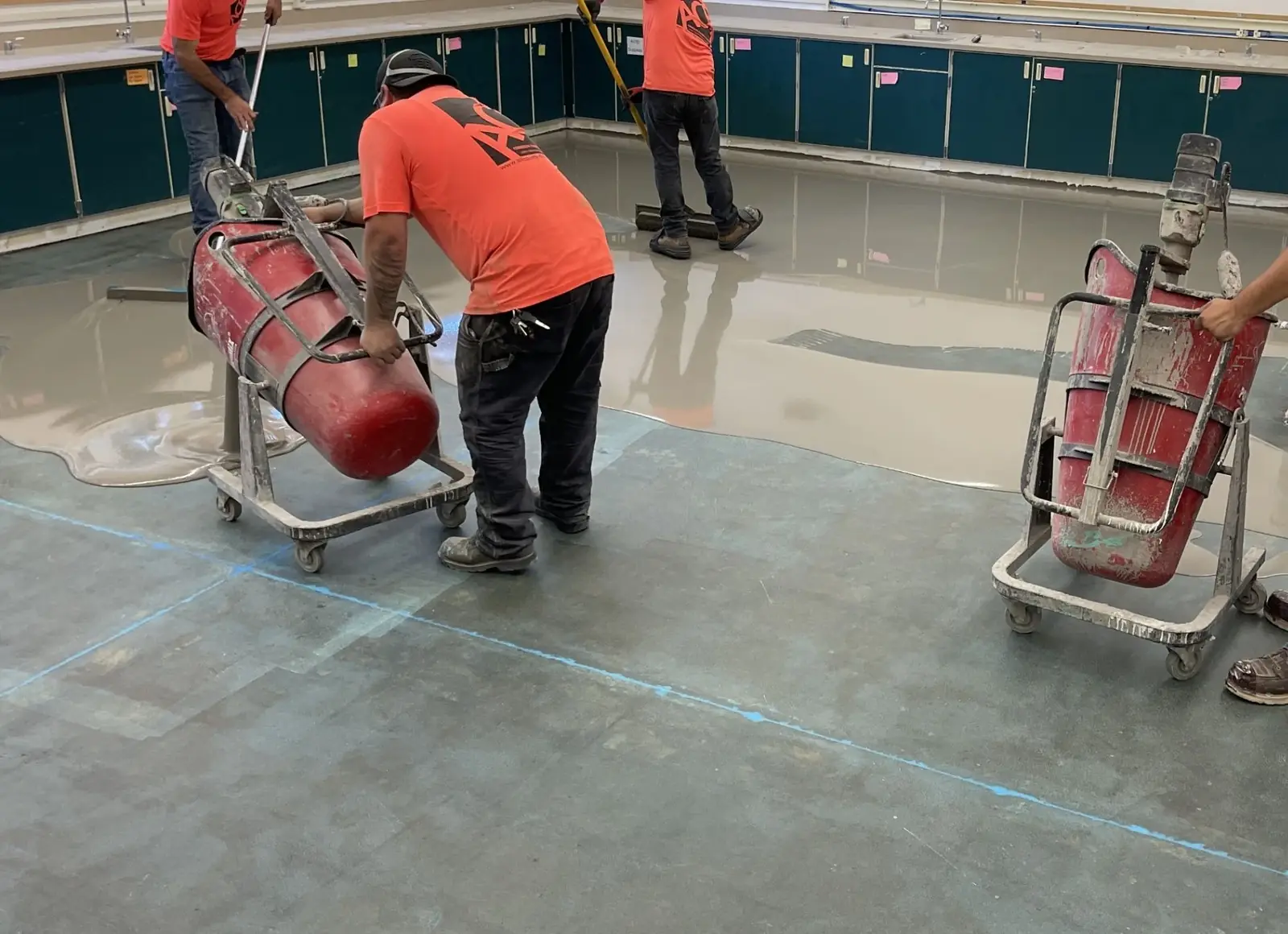
Turnkey preparation can include floor removal, adhesive scraping, concrete grinding and shot blasting, crack repair and patching, moisture mitigation, and underlayment. The scope is matched to site conditions and the flooring manufacturer’s specifications.
Addressing substrate and moisture issues early helps reduce the risk of installation delays and premature flooring failure, while protecting the project schedule.
Preparation steps
Review existing conditions, flooring requirements, and site access. Identify uneven areas, cracks, moisture concerns, and existing adhesives that may affect the new installation.
Remove old floor coverings, scrape, sand or grind adhesive as needed to leave a clean, suitable substrate for the next system.
Prepare concrete through diamond grinding or shot blasting. Evaluate surface: If required, start the process of applying a primer or a substrate bonding primer and moisture-control system. Start with patching cracks, divots, spauls, low spots and/or apply skim coat patch or cementitious underlayment where needed to meet product requirements.